
What We Handle
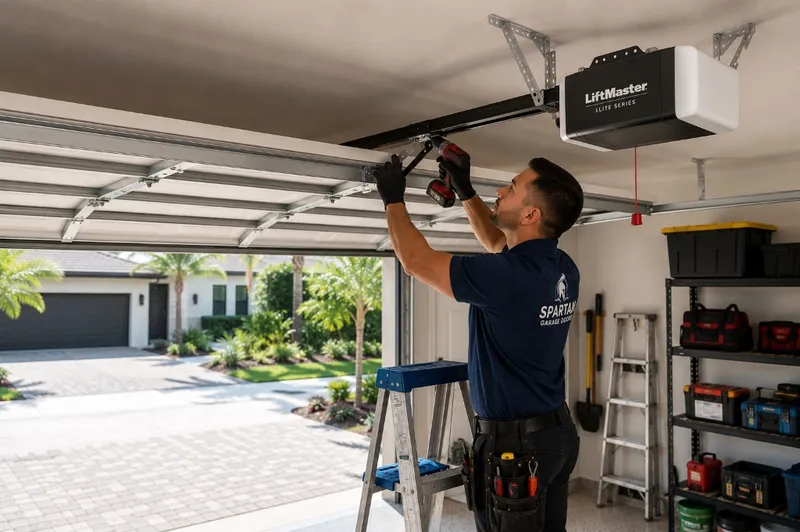
When a residential garage door malfunctions, it disrupts security, parking, and home access. We dispatch fully equipped service vehicles to diagnose and repair bent tracks, noisy operations, broken cables, and automated opener systems on our first visit. We handle garage door repair across Southwest Florida, including Punta Gorda, Port Charlotte and Sarasota.
Common Garage Door Problems We Handle
Often caused by misaligned safety sensors, broken torsion springs, snapped cables, or a malfunctioning opener motor gear.
If a cable snaps or a roller pops out of the track, the door can become jammed at an angle. Forcing it can cause severe structural damage.
Tracks guide the door path. If they become bent due to minor impacts or loose bracket fasteners, the rollers will bind or slide out entirely.
Grinding or squeaking sounds point to dry hardware, worn steel rollers, or dry hinges. Upgrading to nylon rollers reduces noise significantly.
Misaligned photoelectric eyes, frayed sensor wires, or damaged remote signals prevent the door from closing properly.
Avoid operating a garage door that is jammed, hanging unevenly, or has visibly damaged cables or springs. Continued use under these conditions can cause opener gear failure, warp the steel sections, or drop the heavy door suddenly, creating a severe safety hazard.
Our Service Process
Why StormForge
All work is done by background-checked, fully trained employees of StormForge Garage Doors.
We diagnose, present choices, and write a fixed quote before any wrench touches your door.
Call or text us 24/7 - we'll confirm the soonest same-day arrival window based on technician availability in your area.
License #CRC1334692
Frequently Asked Questions
Q: Can you repair a garage door that won't open?
Yes. A door that won't open is often due to a broken spring, snapped lift cables, or a damaged opener gear. Our technicians can diagnose the system and replace the failed parts safely.
Q: Why is my garage door opening unevenly?
Uneven movement typically indicates that one of the lift cables has slipped or snapped, or that a torsion spring has lost tension on one side. Operating the door in this state can warp the tracks and should be avoided.
Q: Do you repair garage door openers?
Yes, we diagnose and repair automated opener issues, including gear kit replacements, safety sensor alignments, wall button rewiring, and remote limit adjustments.
Q: Can an off-track garage door be repaired?
Yes. We realign the tracks, inspect the rollers and cables for damage, reset the door sections back into position, and verify proper balance.
Q: Should I keep using a noisy garage door?
A noisy door is a warning sign of dry bearings, worn rollers, or loose hinges. Continuing to run it can cause parts to break. Lubrication or upgrading to quiet nylon rollers is recommended.
Q: When should a garage door be replaced instead of repaired?
If the door sections have severe structural damage, are deeply rusted, or if repeated repairs on older components cost more than a modern, wind-resistant new door installation, replacement is the more reliable choice.
Service Dispatch Cities
We dispatch mobile service trucks daily throughout these Southwest Florida cities: